Conceptive AI Let’s talk

From investment to everyday use

AI
Transformation.

Change the work.
Make the change last.

Putting AI to work takes more than introducing a tool. The organisation, workflows and skills around it need to evolve together. We help your teams make that change, with clear ownership and a way to measure progress.

Illustrative logistics planning: two colleagues review AI-assisted maritime route options on a planning table overlooking a commercial harbour.
Expertise shapes the changeBring AI into operational decisions.

People. Process. Organisation.

For businesses and public-sector organisations turning AI ambition into operational change.

Why transformation matters

From separate efforts
to connected capability.

AI creates possibilities. Realising them means changing the organisation around it: how work is organised, how it gets done and how people build the skills to own it.

OrganisationWorkflowsPeople

Tools alone leave gaps.

AI initiatives can move ahead while responsibilities, processes and skills stay unchanged. Teams find their own approaches, handoffs become unclear and useful work struggles to take hold beyond a pilot.

The challenge is organisational: make AI activity part of how the business works.

Change the connections.

Work with the people who run the organisation. Shape the operating model, redesign workflows around human–AI collaboration and prepare people for changed roles. Develop these together, so each change supports the others.

One connected effort across organisation, workflows and workforce capability.

A way of working people can own.

Teams know who decides, how work moves and where human judgement is needed. AI becomes part of everyday practice, with practical support, feedback and agreed measures to guide improvement.

Better workflows, sustained adoption and capability that develops through the work.

Each strand keeps its role. Transformation connects organisation, workflows and people into a coherent way of working.

How the organisation supports the change

Decide what is shared.
Make ownership clear.

Choose a model around the work it needs to support. We consider what functions can share, where their needs differ and which expertise is available.

01Centralised
Pool specialist expertise and resources in one Data & AI team. Agree how business functions shape priorities and receive support.
02Federated
Place capability within functions, close to their decisions and workflows. Agree common standards and ways to share what teams learn.
03Hybrid
Combine a shared Data & AI team with capability in business functions. Agree which decisions stay local and which need a shared approach.

Make the model
work for your people.

Define the roles and decision rights needed to support priority workflows. Identify what your teams can take on and where hiring or external expertise is needed.

Your operational leaders, people teams and technology specialists bring the context. We work alongside them, drawing on the Conceptive AI network of experts where relevant AI or subject-matter expertise is needed.

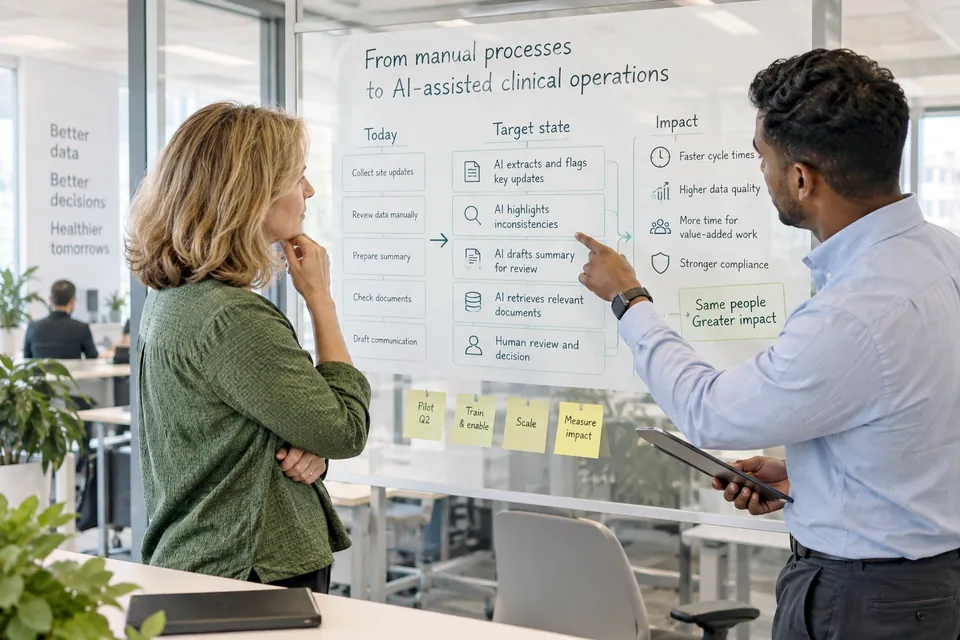
Illustrative workflow redesign: two colleagues compare manual clinical operations with proposed AI-assisted steps and human review on a workflow board.
Redesign with your peopleNew workflows. Clear responsibilities.

Change people can put into practice

Adoption begins
in the working day.

Work with each function to redefine responsibilities and handoffs as AI changes the work. Identify skills gaps and build a reskilling plan around those roles, with applied learning through AI Upskilling.

A reason to change.
Explain what is changing, why it matters and what it means for each role. Align goals and incentives with the revised responsibilities.
People who can help.
Build a champions network that helps colleagues apply the new approach and brings difficulties to the people who can resolve them.
Evidence to act on.
Measure use alongside work quality and time spent. Combine the results with team feedback to improve the process, learning and support.

A focused way to start

AI Operating
Model Blueprint.

Define how AI work is organised.
Make the first changes clear.

Agree who makes decisions, how teams work together and what needs to change first. The blueprint connects your target operating model with practical priorities for adoption.

What you take forward

  1. 01

    An operating model.

    How the organisation, roles and decision-making fit together.

  2. 02

    Priority workflow changes.

    The responsibilities and handoffs to redesign first.

  3. 03

    An adoption plan.

    Capability needs, ownership and measures of operational use.

Scope, contributors, deliverables and success criteria are agreed before starting. The work can begin as a focused engagement or form part of a wider transformation.

A look at the output

A blueprint for
working differently.

Explore the decisions, workflow changes and adoption priorities a Blueprint puts in your hands.

AI Operating Model Blueprint

Start with the question closest to yours.

What lands on your desk

“Who owns the result once AI becomes part of the work?”

Business lead

“What should our team own, and what should we share?”

Functional lead

“Can this support more teams without duplicating the effort?”

Sponsor

Ambition across teams.
Ownership still unclear.

Conceptive AI Operating modelIllustrative extract

Clear ownership.
Capability that can grow.

We design how responsibilities, decisions and specialist support fit together, around your priorities and the capabilities you already have.

Our recommendation

Keep operational ownership close to the work. Coordinate the expertise and investment functions need to share.

Operational ownershipProcess owners
Initiatives have sponsors, but ownership of the changed work is unclear. The proposed process owner is accountable for workflow performance, role changes and acceptance into everyday use.
Shared capabilityData & AI lead
Functions seek the same expertise separately. Shared methods and agreed support capacity serve those needs; the capability plan identifies gaps for reskilling, hiring or external support.
Decisions across functionsExecutive sponsor
Competing demands have no agreed resolution route. The sponsor decides investment priorities, informed by process owners’ requirements and the specialist lead’s capacity assessment.

Responsibility map prepared

Decisions and owners are assigned. The remaining choice is how to resource shared specialist capacity and close capability gaps before wider adoption.

How your organisation shapes the blueprint, and what it reveals in return.Operating model: connect business ownership with the capability it needs.
  1. Organisational fit

    Build around how your organisation works.

    Your priorities, functional autonomy and existing expertise shape where decisions and specialist capability should sit.

    In your operating model

    We define the centralised, federated or hybrid arrangement that fits those needs. The allocation shown here illustrates one possible configuration.

  2. Capacity to grow

    See what the next stage will require.

    The responsibility map reveals where unclear ownership or competing demands could limit wider adoption.

    For your next decision

    You can see which capability to develop or source, and which shared investments could support more functions.

What lands on your desk

“We have new tools, but the work still follows the old process.”

Operational lead

“What will AI take on, and where does my judgement matter?”

Team member

“Which changes would make a meaningful difference?”

Process owner

New possibilities.
Old ways of working.

Conceptive AI Workflow redesignIllustrative extract

Better work.
Designed around people and AI.

We work with the people doing the work to design the proposed workflow, changed roles and dependencies to resolve first.

Our recommendation

Redesign the complete priority workflow, removing avoidable coordination and making human decisions explicit.

Repeated preparationConnect the evidence
Teams rebuild information at each handoff. AI brings the relevant information together for review, aiming to reduce rework and give specialists more time for decisions.
Waiting between teamsSeparate routine work from exceptions
Routine work and exceptions follow the same approval chain. The redesign defines steps that can proceed within agreed conditions, consequential decisions for review and an owner for exceptions.
Roles built around the old processMake room for judgement
Responsibilities focus on manual collection and checking. The proposed role profiles define who reviews the evidence, investigates exceptions and owns decisions, with the skills and support each role needs.

First change prepared

The first redesign connects information gathering and review in one owned workflow. Before introduction: the process owner confirms data sources, review criteria and team capacity.

How your organisation shapes the blueprint, and what it reveals in return.Workflow redesign: turn intended benefits into changes people can use.
  1. Working reality

    Design with the people who know the work.

    The outcome you need, real handoffs and the consequences of errors shape where AI can help and where human judgement remains essential.

    In your workflow design

    We map the proposed steps, responsibilities and exception routes against the way the work happens today.

  2. What must change

    Make the dependencies visible.

    The proposed workflow exposes changes to data access, skills, responsibilities and support that the technology alone cannot resolve.

    For your first change

    You can sequence the preparation, assign owners and identify redesign patterns worth assessing for other workflows.

What lands on your desk

“How do we make this part of everyday work?”

Sponsor

“What will teams need beyond the initial training?”

People lead

“How will we know when it is ready to extend?”

Operational lead

A change introduced.
A new habit still to build.

Conceptive AI Adoption planIllustrative extract

A change people can use.
A capability you can extend.

We prepare the sequence, responsibilities, support and review criteria that connect the proposed operating model to routine use.

Our recommendation

Prepare people and support alongside the workflow. Use operational evidence to decide what to extend, adapt or pause.

Prepare the changeProcess owner + people lead
Align responsibilities, incentives and communication. Assess skills gaps and arrange practice and support, with a baseline and agreed criteria for the first review.
Support everyday useChampions + support owners
Help colleagues apply the workflow. Bring unclear handoffs, extra checking and reasons for bypassing the process to named owners who can resolve them.
Review and extendSponsor + process owner
Compare quality, rework and time with the baseline, alongside use and team feedback. Carry forward effective methods after checking the next team’s workflow fit and support capacity.

Conditions for wider use

Extend when agreed quality and adoption criteria are met, blocking issues are resolved, and the next team’s skills, support and capacity are in place.


How your organisation shapes the blueprint, and what it reveals in return.Adoption and growth: make progress repeatable without overlooking local needs.
  1. Starting capability

    Plan a change your teams can absorb.

    Existing skills, workload and available support shape the sequence, practice and communication each function needs.

    In your adoption plan

    We connect role changes to preparation and support, with owners, measures and review points that fit the working day.

  2. Evidence for expansion

    Carry learning into the next change.

    Operational use and team feedback show what is working, what needs adjustment and which foundations could support another function.

    For your next investment

    You can decide what to extend, adapt or pause, with the local preparation and capacity required for wider use made clear.

Discuss your AI Operating Model Blueprint

Illustrative Blueprint extracts, not client findings. The operating model, workflow priorities and adoption plan are tailored to your organisation and agreed scope. Implementation and ongoing support are agreed separately.